
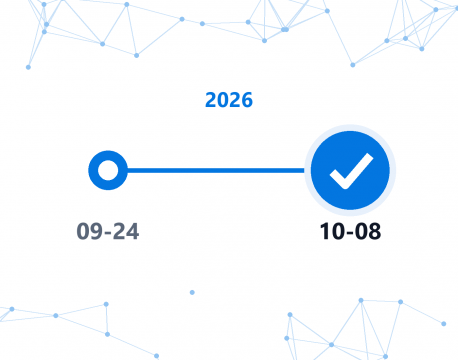
On October 8, Google confirmed that the spam update it started on September 24 has finished rolling out. It took almost two weeks and applied globally to all languages.
This is the fourth spam update this year, after March, June and August, but a much longer one: the previous updates were completed within a few days.
What is a spam update
Google detects spam continuously through automated systems and improves those systems several times a year. Unlike core updates, which reassess the quality and helpfulness of content, a spam update targets websites that violate Google's spam policies.
The most common violations:
- Scaled content abuse: pages produced in bulk to rank rather than to help readers, whether written by people or by AI.
- Link spam: links bought or exchanged to manipulate rankings.
- Site reputation abuse: third-party content published on a trusted domain only to benefit from its authority.
- Expired domain abuse: an old domain bought and filled with unrelated content.
- Hidden text, cloaking and sneaky redirects.
Why it matters now
Only now that the rollout is complete can the final impact be assessed reliably. Rankings fluctuated between September 24 and October 8, so changes during that period should not be read as normal competitive movement or as technical problems on your website.
How to check your website
- In Google Search Console, compare the period after October 8 with a period of the same length before September 24. Avoid comparing weeks that fall within the rollout.
- Look at clicks and impressions by page: did the change affect the whole website or only certain pages or sections?
- Rule out seasonality by comparing the same period with last year.
- Open the "Security & Manual actions" section in Search Console. A manual action is separate from an algorithmic update, and Google notifies you about it directly.
- If the drop coincides with the update dates, review your content and links against Google's spam policies.
What to do if your traffic dropped
There is no quick fix. Google explains that after violations are removed, a site may improve once its automated systems learn, over a period of months, that the site complies with the policies.
- Review pages created in bulk: rewrite, merge or remove those that add nothing new.
- Assess your link profile. If the site relied on paid links, Google simply stops counting them, so rankings fall not because of a penalty but because those links no longer work.
- Do not try to fix the situation with new paid links: it only makes the problem worse.
- If you host content from other companies, make sure it is related to your field and that you oversee it.
What if your rankings went up?
That can also be a result of the update: if competitors were affected, your website may have moved into their positions. It is worth checking which pages grew and strengthening those.
If you are not sure whether a change on your website is related to this update, contact us: we will review your Search Console data and tell you what it shows.
Source: Google Search Status Dashboard.


